Staring at a blinking cursor is hard enough on a good day. Doing it while you’re grieving feels impossible. You’re sitting there feeling the pressure to summarize decades of life, history, and love into a five-minute speech, and it’s paralyzing. We get it.
Quick Resource
Grandma Eulogy Generator – A guided tool created to help you write a tribute that truly sounds like your grandmother, not a generic script.
https://eulogygenerator.com/grandma-eulogy-generator/
This guide isn’t about following a stiff template. It’s about stripping away the generic advice and figuring out how to capture the specific, nuanced, real woman she was. The goal is to move you from overwhelmed silence to a speech that feels authentic to her memory and your relationship. Writing a eulogy isn’t just about listing facts; it’s about finding the emotional heartbeat of her story.
Whether she was the quiet heart of the home or a fierce, loud matriarch, condensing her legacy is a tall order. Most experts suggest keeping a eulogy to around 400 words, or 2–3 minutes spoken. While that sounds short, it’s actually a relief. It means you don’t have to say everything—you just have to say the things that matter most.
Focus on what truly mattered with help from the Grandma Eulogy Generator → https://eulogygenerator.com/grandma-eulogy-generator/

In a Rush? (TL;DR)
If you are short on time or just emotionally drained, here are the main things you need to know. Don’t worry about the rest right now.
- Skip the chronological list: Don’t just read her resume. Focus on her character and stories, not the dates she moved or changed jobs.
- Talk to the family: Your parents and cousins have pieces of the puzzle you don’t. Ask them.
- Show, don’t tell: Instead of saying “she was generous,” tell the story about the time she gave her coat to a stranger.
- Group by theme: Organize memories by meaning (her humor, her toughness) rather than the year they happened.
- Prepare for the tears: Have a backup reader ready (just in case) and print your speech in a huge font so you don’t lose your place if you cry.
- Use tools: If “grief brain” has you blocked, use interactive writing aids to get the gears turning.
Quick Start Checklist
- [ ] Jot down 3 distinct memories of you and your grandmother.
- [ ] Ask one family member for a story you’ve never heard before.
- [ ] Pick one word that describes her perfectly (e.g., “Feisty,” “Gentle,” “Unstoppable”).
- [ ] Write a 2-sentence opening that isn’t “We are gathered here today.”
- [ ] Pick a backup reader (a cousin or sibling) in case you get overwhelmed.
How the “Grandma Tribute” Has Changed
There’s been a real shift in how we honor matriarchs lately. We’ve moved away from formal, strictly religious recitations toward stories that actually feel like the person. You have permission to write a speech that acknowledges her as a full, complex human being—someone who had a life completely independent of her grandkids—while still honoring how much she loved you. If you’re stuck on the tone, reading some modern grandma eulogy examples can help you see how others balance respect with real storytelling.
Find the right tone for your grandmother’s story using the Grandma Eulogy Generator → https://eulogygenerator.com/grandma-eulogy-generator/
Ditching the Resume
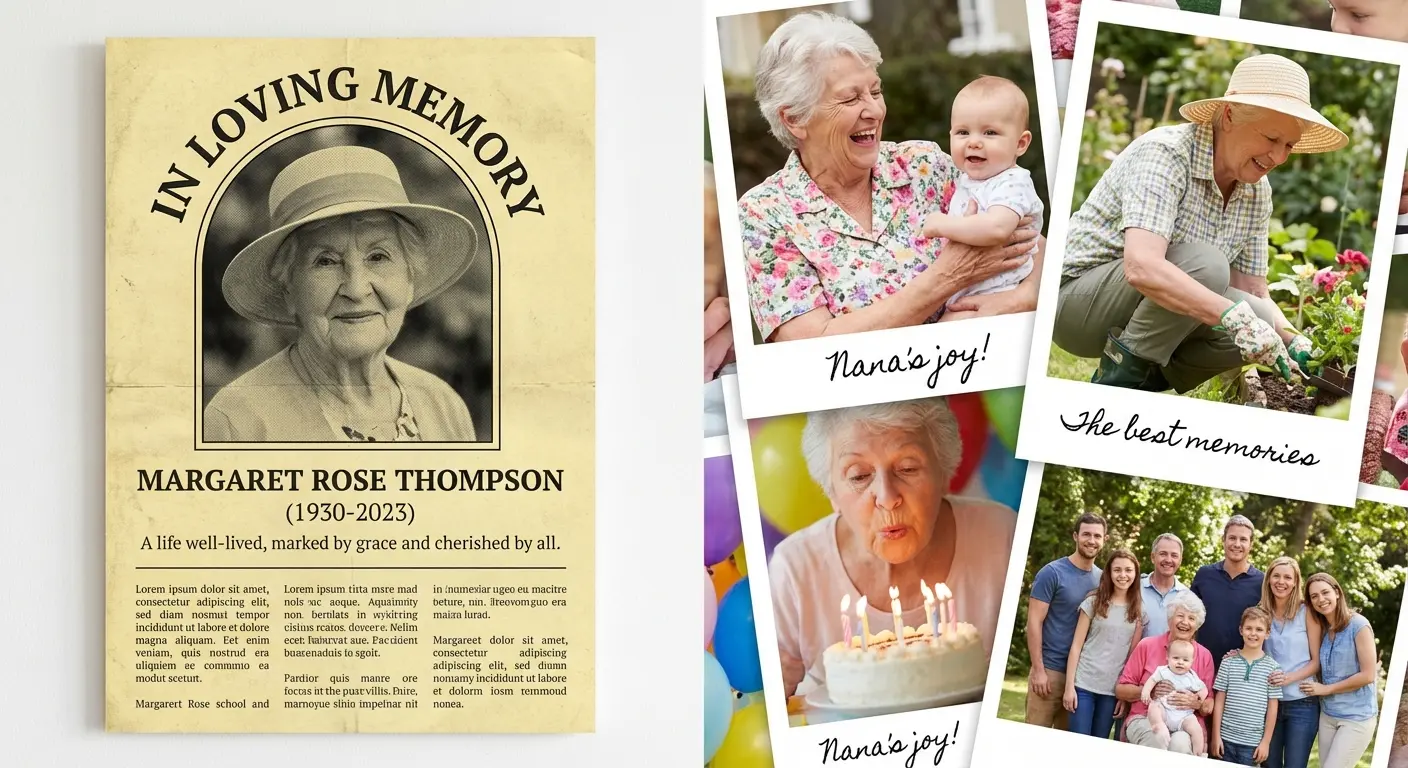
The best eulogies avoid listing birth, marriage, and death dates. Everyone in the room likely knows the basics, or they can read them in the program. Your job is to capture the vibe—the resilience, the humor, the stubbornness—that made her her. Focus on the “why” and “how” of her life, not just the “when.”
Forget the Templates
Standard templates often force you into a structure that feels like filling out a tax form. “Born here, went to school here, worked here.” Boring. A good eulogy demands a theme that highlights who she was, rather than what she accomplished on paper.
She Was the Center
Grandmothers are often the glue. Think about how she connected different generations. Was she the reason everyone gathered for Sunday dinner? Was she the one who made sure cousins actually knew each other? Focus on that magnetic pull she had.
Who Was She Before She Was “Nana”?
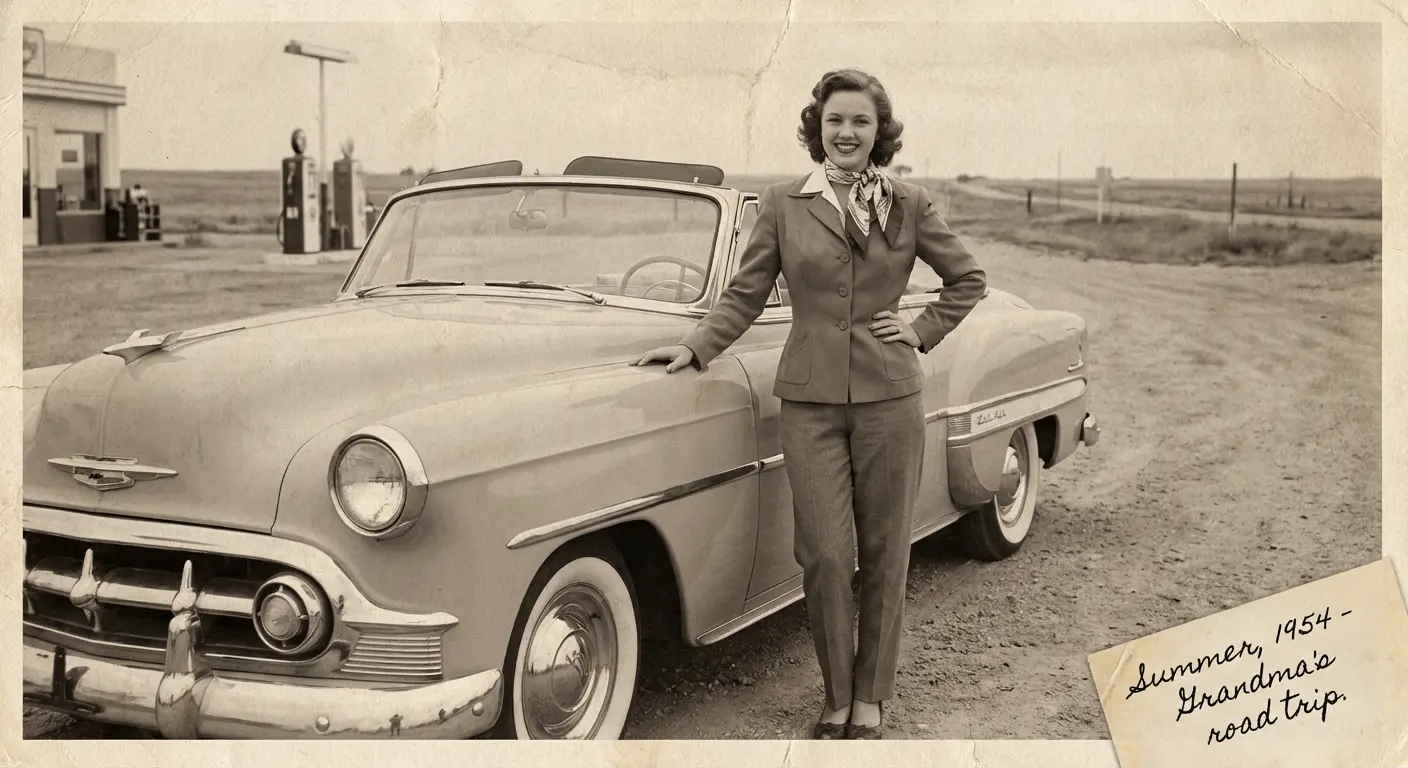
It’s easy to forget, but your grandmother had a whole life, dreams, and a personality long before you showed up. Acknowledging her history as a young woman, a professional, or a friend adds so much depth. It reminds everyone she was a complete human being, not just an elderly relative.
Capture her full life and personality with the Grandma Eulogy Generator → https://eulogygenerator.com/grandma-eulogy-generator/
The Life Before Grandchildren
Ask around about her life in her 20s or 30s. You might find out she was incredibly independent, or had a wild courtship, or struggled in ways you never knew. Sharing these stories helps paint a picture of the woman she was when she was your age.
Beyond the Kitchen
Did she have a life outside the house? Highlighting her impact on her community or workplace shows her reach went beyond the family. Maybe she was the neighborhood confidante, or a volunteer powerhouse. These details prove she mattered to the world, not just to you.
The Secret Skills
Bringing up specific, maybe lesser-known passions makes the speech vivid. Maybe she was a secret poet, a card shark who never lost a game of Bridge, or a gardener who could talk to plants. These specific details ground the speech in reality.
Handling Different Grandparenting Styles
Let’s be real: not every grandmother is the stereotype of the sweet old lady baking cookies. And that is totally fine. A genuine eulogy honors the specific type of grandmother she actually was. Feel free to describe a stern matriarch who taught discipline, or an adventurer who taught you how to take risks. When I wrote my own grandmother’s eulogy, I had to honor her brutal honesty rather than pretending she was soft-spoken. It wouldn’t have been true otherwise.
| Grandmother Style | Possible Theme | The Vibe |
|---|---|---|
| The Matriarch | The Anchor / The Roots | Respectful, Strong, Reverent |
| The Nurturer | Food is Love | Warm, Soft, Nostalgic |
| The Adventurer | The Spark / The Pioneer | Energetic, Bold, Inspiring |
| The Quiet Observer | Silent Strength | Gentle, Reflective |
Honoring Her Specific Brand of Love
How did she show she cared? Some grandmas hug; others feed you until you can’t move. Some show love by worrying about you constantly. Build the tribute around how she did it.
The “Specific Brand of Love” Pivot:
- Generic: “She loved us all very much.”
- Specific: “She wasn’t really a hugger. Her love language was cut-up fruit placed silently on your desk while you studied, or a freshly ironed shirt appearing before a job interview. She loved us by making our lives smoother without us even noticing.”
Honoring Difficult Dynamics
If things were complicated or distant, focus on the lessons learned or the legacy left behind. You can be honest without being cruel. Focus on her strength, her survival instincts, or the history she represented. You don’t have to fake an intimacy that wasn’t there.
Digging for Stories
Before you write a single sentence, you need raw material. This isn’t just about searching your own brain; it’s about crowd-sourcing memories from the family. This ensures you get a full picture, not just the “grandkid” view.
Bring together family memories easily with the Grandma Eulogy Generator → https://eulogygenerator.com/grandma-eulogy-generator/
Ask the Tribe
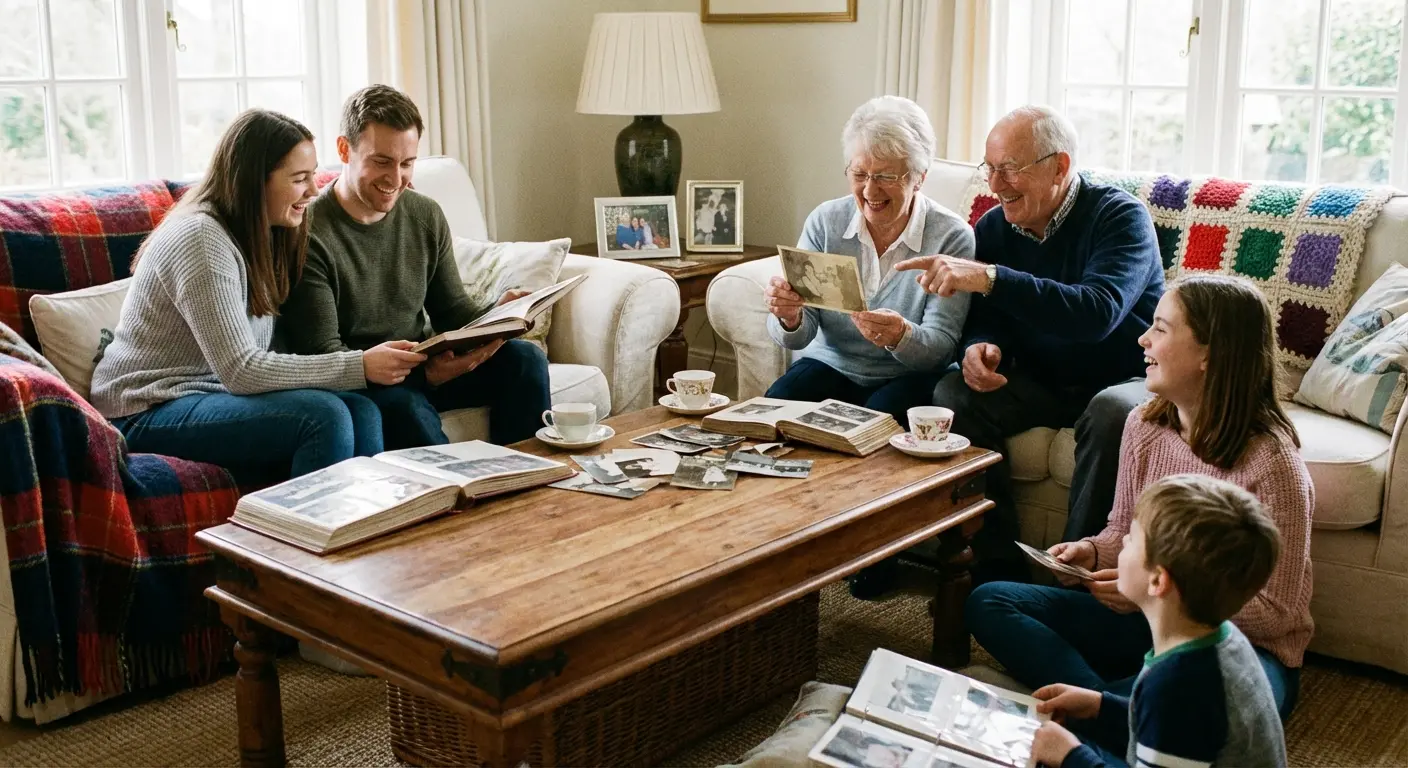
You probably only saw one version of your grandmother. To get the rest, you have to interview people. This usually unearths stories you’ve never heard—the kind that surprise and delight the audience.
The Mom vs. Grandma Perspective
Your parent knew her as a mother, which is often a very different dynamic than the grandmother you knew. Ask your parents how she changed over time. Grandmothers often soften with age, and acknowledging that evolution can be really touching.
The Cousin Connection
Text your cousins. Did she whisper the same advice to everyone? Did she slip everyone a $20 bill with a wink? Finding these shared experiences creates a moment of “Oh my gosh, she did that to me too!” in the room.
When gathering these stories, you might realize just how big her presence was. As one writer reflected, “it hit me how incredibly lucky I have been to have my lovely grandmother with me for 42 years.”
Letters, Photos, and Facebook
Look through her photo albums, recipe cards, or even her Facebook comments if she was online. Sometimes her own words, found in a birthday card, serve as the perfect opening quote. If you can’t find her specific words, using well-chosen grandma eulogy quotes can help say what you’re feeling.
Finding the Thread
A great eulogy isn’t a random list of anecdotes; it has a point. Once you have your memories, look for the pattern. Was she the stabilizer? The comedian? The survivor? This theme will keep your speech from rambling.
Organize memories around a clear theme using the Grandma Eulogy Generator → https://eulogygenerator.com/grandma-eulogy-generator/
Connecting the Dots
Group your memories by meaning, not by date. If you have stories about her gardening, her cooking, and her volunteer work, the connecting thread might be “Nurturing.” This lets you jump around her life timeline without confusing people.
What Did She Teach Us?
Identify the one big lesson she taught the family. This is a powerful anchor for the speech. Maybe she taught everyone that there is always room for one more person at the table, or that you should never leave the house without lipstick.
Drafting the Speech
Okay, now we write. The goal is to give the speech a clear beginning, middle, and end. You want to use sensory details and storytelling rather than dry facts.

The Intro: Hook Them In
The opening needs to settle the room. Avoid clichés like “We are gathered here today.” We know why we’re here. Instead, start with a moment of connection or a defining characteristic that grabs attention.
Start in the Middle of the Action
Begin with a short, warm anecdote that captures her personality immediately. Tell the story of the first time she tried to bake bread and set off the fire alarm. It humanizes her instantly.
The “Hook” Introduction:
“The first time I introduced a boyfriend to Grandma Jean, she didn’t ask him what he did for a living. She looked him dead in the eye and asked, ‘Do you know how to fix a leaky faucet?’ That was Grandma—practical, direct, and always looking for a free handyman.”
Who Are You?
Briefly state who you are in relation to her. Family knows you, but her friends or distant relatives might not. “For those who don’t know me, I’m Sarah, her oldest granddaughter.” Simple.
The Body: Weaving the Stories
This is the meat of the speech. Use the themes you found earlier. This is where you use specific examples to show her character rather than just telling the audience she was “nice.”
Use Your Senses
Describe how she smelled (lilacs? bleach? cigarettes?), the sound of her laugh, or how her hands felt. These sensory details trigger emotions in the audience way better than abstract adjectives.
Prove It
Instead of saying “she was generous,” tell the story of how she gave her coat to a stranger. Instead of saying “she was tough,” tell the story of how she rebuilt her life after a setback. Receipts matter.
It’s Okay to Laugh
Laughter is a release valve for grief. It is absolutely okay to mention her quirks, her terrible driving, or her stubbornness. These “flaws” are often what people miss the most. If she was known for her wit, don’t be afraid to look up a funny grandparent eulogy guide to make sure the humor lands right.
Sometimes, honoring a grandmother means acknowledging her distinct personality, even if it goes against tradition. We see this in stories like the “Betty Kline eulogy”, where a granddaughter captured the spirit of a “grandma funeral she didn’t want,” proving that honesty often honors the deceased better than being solemn.
Tone and Flow
A eulogy is a speech, not an essay. It needs to be written for the ear, not the eye. This means shorter sentences and natural language.
Write Like You Talk
Avoid formal, academic language. If you wouldn’t use a word at the dinner table, don’t put it in the eulogy. Use contractions. Pause. The audience wants to hear your voice honoring her.
Connecting the Timeline
Use transition phrases to move from her early life to her role as a grandmother. Phrases like “Before she was our Nana, she was a pioneer in…” help bridge the gap between her different identities.
Keep the length in mind. While shorter speeches are common, many sources note that most eulogies are around 800–1,200 words (6–8 minutes). This gives you space for deeper stories without dragging on.
The Conclusion
The ending should look forward. It’s about the mark she left on the world and how the family is going to carry that forward.
Living Her Values
Encourage the audience to honor her by doing something she would have done. Ask them to invite a neighbor for coffee, or to forgive someone quickly. Make her legacy active.
Saying Thank You
End with a direct address to her, if you feel comfortable, or just a general “thank you.” A simple “Thank you for being our grandmother” is often the most powerful closer. You might also choose to close with a grandma eulogy poem if you can’t find the right words yourself.
End on a High Note
Try to end on a note of love or inspiration rather than pure sorrow. Leave the audience with a mental image of her at her best—laughing, working, or hugging.

How to Get Through the Speech Without Falling Apart
Writing the eulogy is one thing; delivering it while you’re crying is another. You need a game plan for the physical side of things.
Managing the Body
Public speaking is hard; public speaking while mourning is exhausting. You need a plan for when your voice shakes. When I did this, having a bottle of water nearby saved me when my throat closed up.
Plan B
Designate a backup. Ask a cousin or the officiant to be on standby. If you get up there and just can’t do it, you can nod to them to come up and finish reading. Just knowing that safety net is there usually calms your nerves enough that you won’t need it.
The Setup
Take deep breaths before starting. Seriously. Also, print your speech in a massive font (size 14 or 16) with double spacing. If you cry and look away, you need to be able to find your place again easily.
Handling the Unexpected
Funerals are live events. Things happen. Being mentally prepared for interruptions helps you stay in control.
The Power of the Pause
If you cry, stop. Take a drink of water. Do not apologize. The audience is on your side; they will wait. Tears are part of the tribute. Let them happen, breathe, and continue when you’re ready.
Read the Room
If people laugh at a funny story, let them laugh. Don’t rush to the next line. Those moments of laughter are necessary for everyone in the room.

Podium Survival Kit
- [ ] Printed Speech: Double-spaced, huge font.
- [ ] Water: A bottle (loosen the cap beforehand) or a glass.
- [ ] Tissues: In your pocket, not just on the podium.
- [ ] Reading Glasses: If you need them, bring a spare pair.
- [ ] The “Pause” Button: Remind yourself it is okay to stop and breathe.
Adjusting for the Nature of Loss
Not all losses feel the same. A eulogy for a grandmother who passed away suddenly is going to feel different than one for a grandma who had a long battle with dementia. Acknowledging the context helps everyone process it.
Sudden Loss
When it happens unexpectedly, the room is often in shock. The eulogy needs to ground people. It’s okay to say, “We didn’t think we would be here today.” Acknowledging that shock validates everyone’s pain before you pivot to celebrating her life.
Unfinished Business
If she had a trip planned or a quilt half-finished, mention it. It highlights that she was active and engaged right up until the end. It shifts the focus from her death to her active spirit.
Long-Term Illness or Dementia
If the last few years were defined by illness, the eulogy serves a crucial function: it reminds everyone of who she was before the sickness. It gives her back her personality.
Looking Beyond the End
Explicitly state that while the last few years were hard, they don’t define her whole life. Remind the audience that while her memory may have faded, your memory of her vibrant spirit is still sharp.
Thanking the Caretakers
In cases of long illness, grandmothers often rely heavily on specific family members. Briefly acknowledging their dedication provides necessary emotional closure for the family.
The Revision Process
Writing a eulogy is rarely a one-and-done task. We recommend a process that moves from “emotional mess” to “structured speech.”
| Stage | Focus | What to do |
|---|---|---|
| Draft 1: The Brain Dump | Getting raw memories out | Write for 20 mins. Don’t edit. Just type. |
| Draft 2: The Structuring | Themes & Flow | Group related stories and add transitions. |
| Draft 3: The Polish | Rhythm & Timing | Read it out loud to catch tongue-twisters. |
From Messy Notes to Polished Speech
Expect to write three drafts. The first is for you, the second is for the structure, and the third is for the audience.
The Brain Dump
Write down everything: the time she burned the turkey, her favorite perfume, the specific way she said “hello.” Getting these details out of your head clears the “brain fog” and reveals patterns you didn’t know existed.
Read it Out Loud
This is non-negotiable. Read the speech out loud to catch awkward phrasing. If you stumble over a sentence while sitting at your desk, you will definitely stumble over it while crying at the podium. Simplify the language until it flows naturally.
Getting Help When You Are Stuck
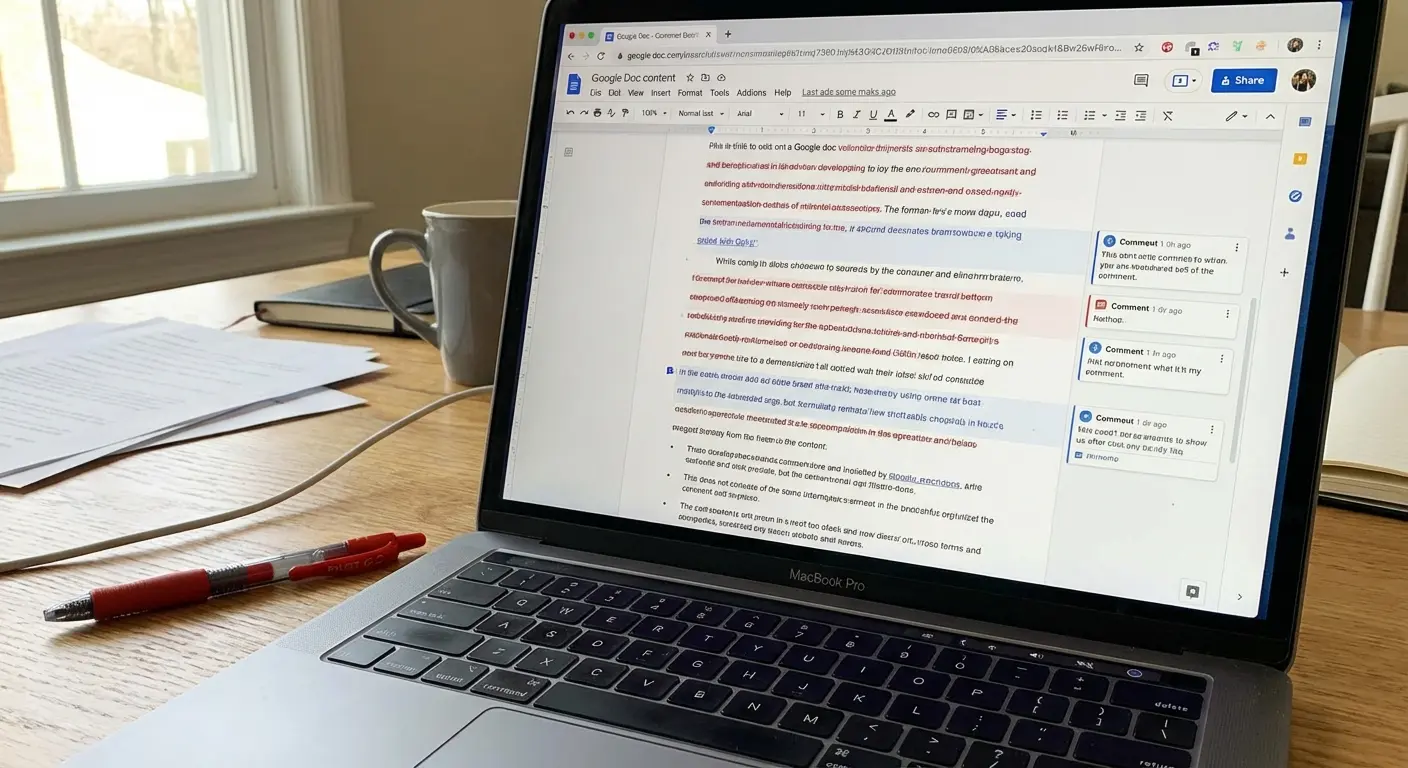
If you are staring at a blank page and “grief brain” is making it hard to focus, you aren’t alone. It is incredibly difficult to become a professional writer while you are actively mourning.
Get unstuck gently with guided prompts from the Grandma Eulogy Generator → https://eulogygenerator.com/grandma-eulogy-generator/
Overcoming Grief Brain
This is where Eulogy Generator can actually help. It’s not just a generic AI; it’s designed to ask you questions about her quirks and your memories to help dig up the good stuff. Whether you need a funny speech or a strictly religious one, the tool helps you get the tone right. Plus, you can revise it as many times as you need until it sounds like you.
Structural Blueprints
Sometimes it helps to have a framework. These aren’t fill-in-the-blank forms, but architectural styles for building the speech.
The Tree Structure
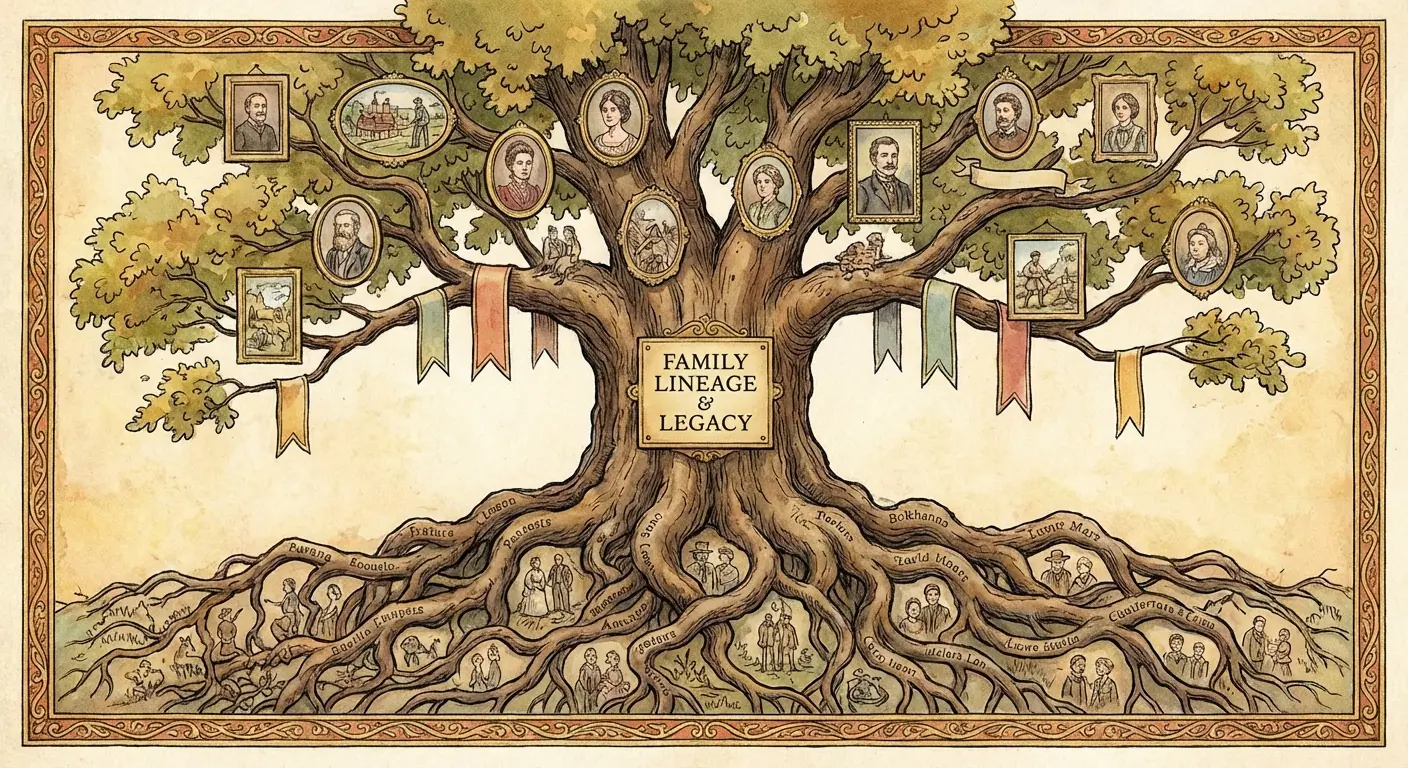
This follows time but focuses on growth. Start with her roots (childhood), move to the trunk (adulthood/parenting), and end with the branches (grandchildren). This works best for grandmothers who were the clear head of a large family.
The Foundation
Start with where she came from. Describe her as a girl growing up in a specific era. This grounds the audience in her history.
The Legacy
Move to the present day to show the result of her life. Point out the legacy she created, referencing the children and grandchildren in the room. “She started with nothing, and look at this room full of people who love her.”
The “Recipe for a Life” Structure
This works great for grandmothers who cooked or hosted. Use the concept of ingredients to describe her personality.
The “Recipe” Theme in Action:
“If you were to write the recipe for Grandma, you’d start with a cup of unshakeable faith. You’d sift in two tablespoons of sass—because we all know she had opinions. You’d fold in endless patience for her grandkids, but a pinch of sternness if you forgot your manners. And you’d bake it all in a home that always smelled like cinnamon.”
Final Thoughts
Writing this tribute is the last gift you give to your grandmother. It doesn’t need to be perfect; it just needs to be true. Focus on her essence, steal stories from your cousins, and speak from the heart.
If you’re still struggling to connect the dots, or if the grief is just making it too hard to organize your thoughts, Eulogy Generator can help bridge that gap. Think of it as a compassionate writing coach that helps you sort through the memories. Take a deep breath, trust your gut, and start writing. For a more detailed walkthrough, our heartfelt eulogy grandma guide is there to help.