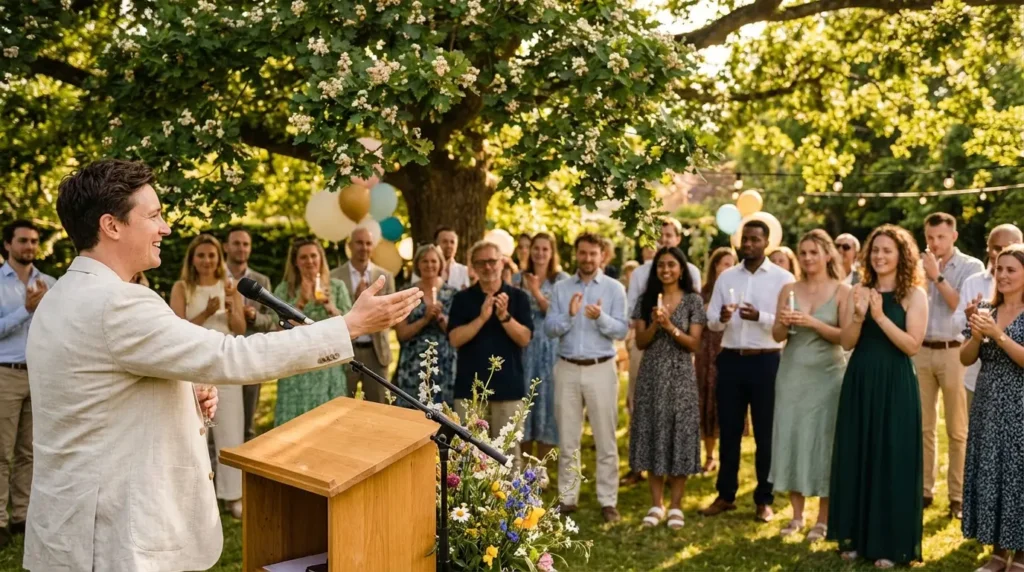
Hi, there. Jen Glantz here. I am so sorry for your recent loss. I’m here to help you plan a celebration of life during this difficult time. Welcome to a guide on writing a celebration of life speech welcome speech.
Celebration of life events have become the preferred choice for 65% of Americans when honoring their departed loved ones. I recently attended one for my dear friend Sarah, and I was struck by how the welcome speech perfectly captured her vibrant spirit. It set a tone that balanced reverence with joy, reflection with celebration. If you’re tasked with giving such a speech, don’t worry – I’ve got you covered.
Let’s dive into the essentials of crafting a welcome speech that will resonate with everyone present, whether they’re in the room or joining virtually. We’ll explore current trends, key elements, personalization techniques, and delivery tips to ensure your speech hits all the right notes.
Resources:
- A list of celebration of life speech examples
- Our #1 celebration of life speech generator
- A guide on how to write a celebration of life speech
Understanding the Essence of a Celebration of Life
Celebration of life events have gained immense popularity in recent years. They offer a refreshing alternative to traditional funerals, focusing on honoring the deceased’s life, legacy, and positive impact rather than dwelling on loss.
A well-crafted welcome speech sets the tone for the entire event. It’s your opportunity to strike that delicate balance between acknowledging grief and celebrating a life well-lived. Understanding the core purpose of these events is crucial to creating a speech that truly resonates with attendees and honors the deceased.
Evolving Trends in Celebration of Life Events
As our approach to mourning evolves, so do celebration of life events. In 2024, we’re seeing more personalized elements, increased use of technology, and interactive components that truly capture the essence of the person being honored.
Virtual and hybrid celebrations have become increasingly common, allowing loved ones from around the world to participate and share memories. When I attended my cousin’s celebration of life last year, family members from three continents were able to join via live stream, sharing stories and memories in real-time. It created a truly global tribute that my cousin would have loved.
Your welcome speech should acknowledge and incorporate these modern elements while maintaining the event’s core purpose of remembrance and celebration. It’s about creating a cohesive experience that feels authentic to the person being honored and meaningful to those in attendance.
Cultural Fusion in Celebrations
As our societies become more diverse, celebration of life events often blend traditions from different cultures. This creates unique and inclusive experiences that honor the deceased’s heritage and connections. Your welcome speech can play a crucial role in explaining and unifying these diverse elements, helping all attendees appreciate the rich tapestry of traditions represented.
Multilingual welcome addresses are becoming more common as well. To accommodate diverse attendees, consider incorporating key phrases or sentiments in languages that were significant to the deceased or their loved ones. This approach emphasizes the universal nature of love and remembrance, making all guests feel included and respected.
| Cultural Element | Significance | Integration in Speech |
|---|---|---|
| Día de los Muertos (Mexican) | Honoring ancestors | Mention colorful altar or ofrenda |
| Lantern Festival (Chinese) | Guiding spirits | Describe lantern release ceremony |
| Irish Wake | Celebrating life | Highlight storytelling and music |
| Hindu Puja | Spiritual transition | Explain significance of rituals |
Crafting an Impactful Welcome Speech
Opening with Impact
Start with a meaningful quote or anecdote that captures the spirit of the deceased, like beginning with their favorite saying to set the emotional tone.
Acknowledging Emotions
Address both grief and joy present in the room, validating the range of emotions and creating a safe space for attendees to fully experience their feelings.
Incorporating Interactive Elements
Include engaging components that encourage active participation and create a more dynamic experience in honoring the deceased.
Guiding Collective Reflection
Lead attendees through a moment of shared reflection, asking them to recall favorite memories or qualities of the deceased to foster connection.
Introducing Activities
Present any planned participatory elements like memory-sharing sessions or collaborative projects, setting clear expectations and generating enthusiasm.
Setting the Tone
Craft and deliver the welcome speech with sincerity to create a foundation for a meaningful celebration that honors your loved one.


5 Celebration of Life Welcome Speech Examples:
Welcome Speech Example: Warm & Inclusive
Welcome, family and friends. Today we gather to celebrate a life that touched us all in unique ways. Some of you traveled across continents, others across town, but each of you carries special memories that help tell the story of the remarkable person we’re here to honor.
In our grief, we find comfort in coming together. Today isn’t just about mourning a loss – it’s about celebrating a life well-lived, sharing stories that make us laugh and cry, and supporting each other as we remember.
You’ll notice memory cards on your seats, photos on the walls, and familiar faces all around. We encourage you to share your stories, write down your memories, and connect with others who loved them too.
As we begin this celebration, remember there’s no right way to feel. Tears and laughter are equally welcome here. Together, we’ll honor a life that brought so much love into our world.
Get a personalized celebration of life welcome speech >>
Welcome Speech Example: Celebration & Memory
Today we gather in both sorrow and joy – sorrow for our loss, but joy for the gift of having known someone so extraordinary. Each person here represents a chapter in their story, a moment shared, a life touched.
Throughout this celebration, you’ll find opportunities to share your memories. The memory tree in the corner awaits your written stories, the photo wall invites your reflections, and the sharing circle later will welcome your voices.
We’ve created this space to honor both tears and laughter. Let every story shared, every memory recalled, be a tribute to a life that enriched us all. As you move through the room today, take time to connect with others, share your memories, and find comfort in our shared love.
Remember, there’s no timeline for grief, no protocol for celebration. Be present in whatever way feels right for you.
Get a personalized celebration of life welcome speech >>
Welcome Speech Example: Intimate & Meaningful
Welcome to this gathering of hearts and memories. We come together not just to mourn, but to celebrate a life that brought color to our world. Looking around this room, I see faces that tell different parts of the same beautiful story.
Today is about sharing those stories, remembering the laughter, honoring the lessons, and supporting each other. We’ve created spaces for quiet reflection and joyful remembrance – each equally important in our journey of celebration and healing.
You’ll notice we’ve arranged photos and mementos around the room. Each tells a story, captures a moment, reminds us of the countless ways one life can touch so many others. Feel free to pause, reflect, and share your own memories with those around you.
In this safe space, all emotions are welcome. Tears may mingle with laughter, and that’s exactly as it should be.
Get a personalized celebration of life welcome speech >>
Welcome Speech Example: Heartfelt & Unifying
Today we come together to celebrate someone who changed all our lives. Each person here holds a unique piece of their story – from childhood friends to new acquaintances, family members to colleagues. Every connection represents a life touched, changed, and made brighter.
Around our gathering space, we’ve created stations for sharing and remembering. The memory book awaits your stories, the photo wall tells their journey, and the sharing circle will give voice to our collective memories.
This celebration is designed for both reflection and connection. Feel free to move between quiet moments of remembrance and joyful sharing of stories. There’s no right way to honor their memory – only what feels true to your heart.
Let this space be one of comfort, where grief and gratitude can exist together, where tears and smiles are equally welcome.
Get a personalized celebration of life welcome speech >>
Welcome Speech Example: Uplifting & Supportive
Thank you all for being here today. We gather not just to say goodbye, but to celebrate hello – hello to the memories we share, the stories we tell, and the legacy that lives on in each of us.
Today’s celebration is designed to honor a life well-lived. You’ll find memory cards at your seats, sharing circles throughout the afternoon, and quiet spaces for reflection. Each element is an opportunity to honor their impact in your own way.
As we move through this day together, remember that every tear honors the love we shared, every laugh celebrates the joy they brought, and every story keeps their memory alive in our hearts.
Let this be a space of both remembrance and celebration, where we can support each other while honoring a life that meant so much to us all.
Get a personalized celebration of life welcome speech >>
Personalizing the Welcome Speech
A truly impactful celebration of life welcome speech reflects the unique personality, achievements, and values of the deceased. This creates a deeply personal and memorable experience for all attendees. Personalization requires thorough research and thoughtful curation of information to paint a vivid picture of the person being honored.
Start by highlighting the deceased’s legacy. Incorporate specific aspects of their life, such as their passions, accomplishments, or the positive impact they had on others. This not only pays tribute to the individual but also helps attendees connect or reconnect with cherished memories.
Don’t forget to include favorite expressions or life mottos of the deceased. These personal touches can evoke powerful memories and emotions for those who knew the person well. In my aunt’s case, her favorite saying was “Grow where you’re planted.” I wove this phrase throughout the speech, using it to illustrate different aspects of her life and character.
Delivering the Welcome Speech with Grace and Authenticity
Now that we’ve covered the content of your welcome speech, let’s talk about delivery. How you present your speech is just as crucial as what you say. Your delivery can significantly impact how the message is received and how attendees engage with the rest of the celebration.
First and foremost, aim for a tone that is warm, inclusive, and genuine. This should reflect both the spirit of the event and the personality of the deceased. When I delivered the welcome speech at my grandmother’s celebration of life, I channeled her warmth and humor, which helped put everyone at ease and set the right tone for the event.
Remember, your goal is to connect with the attendees and honor the deceased effectively. By preparing thoroughly and allowing for authentic emotional expression, you’ll be able to deliver a welcome speech that resonates deeply with everyone present.
Learnings Recap
Crafting a celebration of life welcome speech in 2024 requires a delicate balance of tradition and innovation. By understanding current trends, personalizing content, and adapting to changing social norms, you can create a speech that truly honors the deceased and resonates with all attendees. Remember, the goal is to celebrate a life well-lived while providing comfort and fostering connection among those left behind.
Here are the key takeaways:
- Embrace technology and interactive elements to create an engaging, inclusive experience
- Personalize your speech with specific anecdotes, sayings, and achievements of the deceased
- Be prepared emotionally and technically, allowing for authentic delivery
- Acknowledge diverse relationships and incorporate digital tributes when appropriate
- Strike a balance between celebration and acknowledging grief
Resources:
- A list of celebration of life speech examples
- Our #1 celebration of life speech generator
- A guide on how to write a celebration of life speech
