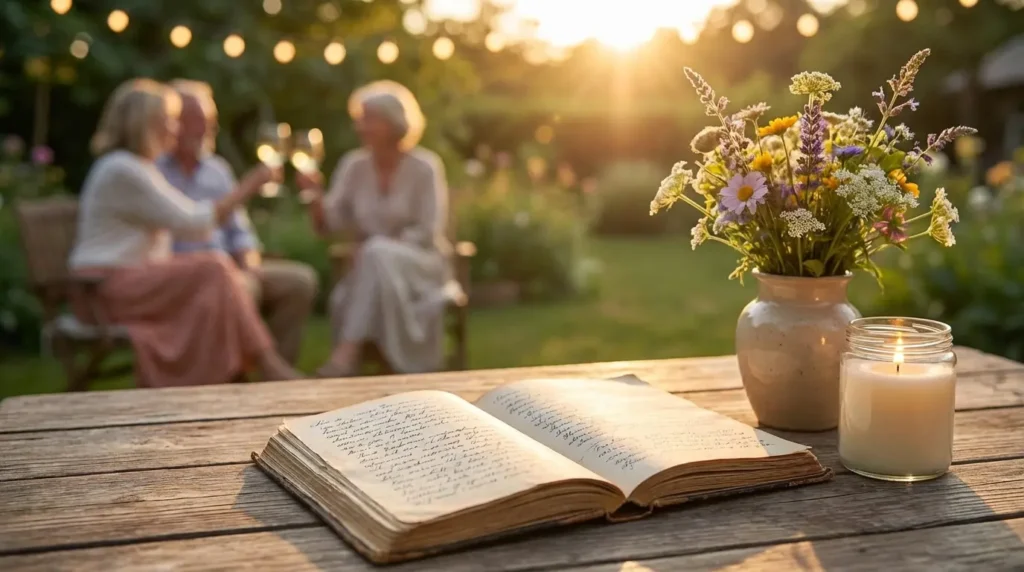
Hi, there. Jen Glantz here. I am so sorry for your recent loss. I’m here to help you plan a celebration of life during this difficult time. Welcome to a guide on celebration of life poems.
When we lose someone dear to us, finding the right words to honor their memory can be challenging. That’s where celebration of life poems come in. These special verses offer a unique way to commemorate a loved one’s life during a memorial service, focusing on positive memories and the lasting impact they’ve had on others.
Celebration of life poems differ from traditional funeral poems in several key ways. While funeral poems often focus on themes of loss and grief, celebration of life poems emphasize joy, gratitude, and the enduring influence of the deceased. These verses aim to uplift and inspire, encouraging those gathered to reflect on the person’s life with fondness and appreciation.
Resources:
- A list of celebration of life speech examples
- Our #1 celebration of life speech generator
- A guide on how to write a celebration of life speech
Understanding Celebration of Life Poems
Celebration of life poems are special verses that honor the memory of a deceased person by focusing on their positive qualities, achievements, and the joy they brought to others. These poems serve as a tribute to the deceased, highlighting their unique qualities and the impact they had on those around them.
One of the key features of celebration of life poems is their use of vivid imagery and sensory details to evoke memories. By painting a picture with words, these poems can transport listeners back to cherished moments shared with the deceased, creating a powerful emotional connection.
Many celebration of life poems employ present tense to create a sense of the deceased’s ongoing presence. This technique can be incredibly comforting for mourners, as it reinforces the idea that their loved one’s influence continues even after death.
Definition and Purpose
At their core, celebration of life poems aim to comfort mourners by shifting focus from loss to the positive legacy left behind. They serve as a reminder of the joy and love the deceased brought into the world, helping those left behind find solace in happy memories.
These poems often incorporate elements of gratitude and appreciation for the deceased’s life. By highlighting the positive impact the person had on others, celebration of life poems can help mourners feel a sense of continued connection to their loved one.
Many celebration of life poems use metaphors related to nature or light to symbolize continuity. These images can be particularly powerful, as they tap into universal themes of renewal and hope.
For those looking to craft a more comprehensive tribute, our eulogy writing guide offers valuable insights that complement the use of celebration of life poems.
Difference from Traditional Funeral Poems
While traditional funeral poems often focus on themes of loss and grief, celebration of life poems emphasize joy, gratitude, and the enduring impact of the deceased. This shift in focus can create a more uplifting atmosphere during memorial services, helping attendees find comfort in shared memories.
Celebration of life poems typically avoid mournful language and instead use words associated with positivity and growth. This approach can be particularly helpful for those struggling to come to terms with their loss, as it encourages a perspective of gratitude for the time shared with the deceased.
The tone of celebration of life poems is generally more conversational and less formal than traditional elegies. This accessibility can make these poems more relatable and easier for mourners to connect with emotionally.
| Aspect | Traditional Funeral Poems | Celebration of Life Poems |
|---|---|---|
| Focus | Loss and grief | Joy and gratitude |
| Tone | Somber and formal | Uplifting and conversational |
| Themes | Mourning and remembrance | Legacy and positive impact |
| Language | Often archaic or elevated | Contemporary and accessible |
| Imagery | Often dark or melancholic | Light, nature, and growth |
Key Elements of Effective Celebration of Life Poems
Effective celebration of life poems capture the essence of the deceased’s personality, values, and impact. They often include specific memories, character traits, or accomplishments that made the person unique and beloved.
Many successful celebration of life poems use sensory details to evoke strong memories. By appealing to the senses, these poems can transport listeners back to cherished moments, creating a vivid and emotional connection to the deceased.
Effective poems often employ repetition or refrains to create a memorable structure. This technique can help reinforce key themes or messages, making the poem more impactful and easier for listeners to connect with.
The use of inclusive language (e.g., “we” instead of “I”) can help connect the audience to the shared experience of remembering the deceased. This approach fosters a sense of community and shared grief, which can be comforting for mourners.
Source: grammarly.com
Choosing the Right Poem
Selecting an appropriate celebration of life poem requires careful consideration of various factors. The chosen poem should resonate with the deceased’s personality, align with the tone of the memorial service, and connect with the audience.
When choosing a poem, it’s important to consider the deceased’s personal preferences, including favorite authors or literary styles. This attention to detail can make the tribute feel more authentic and meaningful to those who knew the person well.
Another crucial factor to consider is the poem’s length in relation to the overall structure of the memorial service. A longer poem might be appropriate for a dedicated reading, while a shorter verse could be woven into a eulogy or other parts of the service.
It’s also worth considering the cultural and religious background of the deceased and their family. Choosing a poem that aligns with their beliefs and traditions can add an extra layer of meaning to the tribute.
Tone and Mood
The tone of the chosen poem should match the desired atmosphere of the celebration of life. Some services may call for more upbeat, joyful poems, while others might benefit from reflective or philosophical verses.
Uplifting poems often use words associated with light, growth, or celebration. These positive associations can help create an atmosphere of gratitude and appreciation for the life lived.
Reflective poems may incorporate more introspective language and questions about life’s meaning. These verses can provide comfort by encouraging deeper contemplation of the deceased’s impact and legacy.
The rhythm and meter of a poem can significantly influence its mood, with shorter lines often creating a more energetic feel. Consider how the poem’s structure aligns with the overall tone you want to set for the service.
Personal Connection to the Deceased
Choosing poems that reflect the deceased’s personality, interests, or life philosophy can make the tribute more meaningful and authentic. This personal connection helps ensure that the poem truly captures the essence of the person being remembered.
Look for poems that mention hobbies, professions, or values that were important to the deceased. These specific references can trigger fond memories for those in attendance, creating a more emotional and personal experience.
Consider poems that use imagery or metaphors related to the person’s favorite places or activities. For instance, if the deceased was an avid gardener, you might choose a poem like “The Glory of the Garden” by Rudyard Kipling, which celebrates the beauty and labor of gardening.
Poems that address specific life stages or experiences can be particularly poignant if they align with the deceased’s journey. This approach can help paint a fuller picture of the person’s life and the impact they had on others.
Cultural and Religious Factors
Respecting the cultural and religious background of the deceased and their family is crucial when selecting poems. Ensure that the chosen verses align with their beliefs and traditions to create a meaningful and appropriate tribute.
Research cultural-specific poetic forms or themes that may be appropriate for the deceased’s background. This attention to detail can demonstrate respect for their heritage and provide comfort to family members.
Consider poems that incorporate relevant spiritual concepts without being overly dogmatic. This approach can strike a balance between honoring the person’s beliefs and creating an inclusive atmosphere for all attendees.
Be aware of cultural taboos or sensitive topics that should be avoided in the chosen poems. What might be considered appropriate in one culture could be offensive or inappropriate in another, so it’s important to do your research or consult with family members if you’re unsure.
For those looking for guidance on crafting personalized tributes for specific family members, our guide on writing a eulogy for an aunt offers valuable insights that can inform the selection of celebration of life poems.
Length and Complexity
Consider the length and complexity of the poem in relation to the overall memorial service. Shorter, more accessible poems might be preferable for brief tributes, while longer, more intricate verses could be suitable for dedicated readings.
Evaluate the poem’s vocabulary level and ensure it’s appropriate for the audience. While it’s fine to challenge listeners a bit, you don’t want the poem’s meaning to be lost because it’s too difficult to understand.
Consider the rhythm and pacing of the poem, as these factors can affect how easily it’s understood when read aloud. A poem that flows well verbally may have a greater impact than one that looks good on paper but is difficult to recite.
For longer poems, look for natural break points that allow for pauses or audience interaction. This approach can help maintain engagement and prevent the reading from becoming overwhelming.
Audience and Setting
Take into account the composition of the audience and the nature of the memorial service when choosing a poem. The selected verse should be accessible and meaningful to the majority of attendees.
Consider the age range of the audience and choose poems with appropriate themes and language. A poem that resonates with adults might not be suitable for a service where many children will be present.
For outdoor services, nature-themed poems might be particularly fitting. The natural surroundings can enhance the impact of the verse and create a more immersive experience for listeners.
If the audience is multilingual, consider poems that can be effectively translated or read in multiple languages. This inclusivity can help ensure that all attendees feel connected to the tribute.
Source: awm.gov.au
30 Celebration of Life Poems
Nature-Inspired Tributes
The Garden She Tended
In every rose that blooms this spring, I see her gentle touch take wing. The seeds she planted, year by year, Still grow and whisper, “She is near.”
Mountain Spirit
Like peaks that touch the morning sky, Your spirit soared, your dreams flew high. In mountain mists and eagle’s flight, We feel your strength, we sense your light.
Get a personalized celebration of life speech here >>
Legacy Poems
The Teacher’s Gift
Not in books alone, but hearts, Your wisdom gently grew. In countless lives you planted hope, Now blooming, fresh as dew.
Builder’s Legacy
Brick by brick and beam by beam, You built more than walls could seem. In homes and hearts, your work lives on, Your craft at dusk, your skill at dawn.
Get a personalized celebration of life speech here >>
Family Memories
Grandfather’s Workshop
Sawdust memories scatter light, Through beams of Sunday afternoon. Your tools still whisper working songs, As grandkids dance to childhood’s tune.
Kitchen Wisdom
Mixing bowls and recipe cards, Hold more than measurements and time. Your love still seasons every meal, In tastes that make our memories rhyme.
Get a personalized celebration of life speech here >>
Adventure Spirit
Sailor’s Farewell
On waves that dance with morning light, Your spirit sails beyond our sight. In every port and starlit sea, You live in wind-swept memory.
Traveler’s Tale
Maps marked with dreams and distant stars, Tell stories of your wandering heart. Each journey traced in atlas pages, Where your adventures still impart.
Get a personalized celebration of life speech here >>
Peaceful Passages
Forest Light
Through branches touched by evening gold, Your peace descends like gentle rain. In woodland paths and whispered prayers, We find your quiet grace again.
River’s Journey
Like waters flowing to the sea, Your life moved with such grace and ease. In rapids bold, in pools serene, You taught us how to live so free.
Get a personalized celebration of life speech here >>
Professional Pride
Doctor’s Rounds
In healing hands and gentle voice, Compassion walked these halls with you. Each life you touched, each heart you healed, Still echoes with your kindness true.
Artist’s Light
Colors dance on canvas white, Like memories of your creative sight. In brushstrokes bold and subtle shade, Your vision lives, will never fade.
Get a personalized celebration of life speech here >>
Musical Memories
Pianist’s Echo
Keys still sing with memories sweet, Of melodies you used to play. In every note and gentle pause, We hear your music’s lasting sway.
Singer’s Legacy
Your voice still echoes in the choir, In hymns that lift our spirits higher. Though silent now, your song lives on, In hearts that beat with music’s dawn.
Get a personalized celebration of life speech here >>
Spiritual Connection
Faith’s Journey
Like stars that guide through darkest night, Your faith showed us the way to light. In prayer and praise, in hope renewed, We feel your spirit’s magnitude.
Sacred Dance
Through incense smoke and candlelight, Your spirit dances, pure and bright. In sacred spaces, holy ground, Your presence still can be found.
Get a personalized celebration of life speech here >>
Sports and Games
Coach’s Wisdom
More than scores and winning plays, You taught us how to meet life’s gaze. In victory sweet or loss profound, Your lessons still guide us around.
Player’s Heart
On fields where champions are made, Your passion never seemed to fade. In every game and team’s success, Your spirit shows its fearlessness.
Get a personalized celebration of life speech here >>
Gardener’s Soul
Harvest Home
In autumn gardens, ripe with care, Your loving touch still lingers there. Each fruit and flower, herb and vine, Holds memories sweet as summer wine.
Wildflower Ways
Not bound by fence or garden wall, Your spirit grew both free and tall. Like wildflowers in mountain air, You bloomed with joy beyond compare.
Get a personalized celebration of life speech here >>
Military Honor
Soldier’s Heart
Standing guard at freedom’s gate, Your courage made our nation great. In flags that wave and medals bright, We honor still your valiant fight.
Service Pride
Duty, honor, country true, These values lived and breathed in you. In uniform and service pure, Your dedication will endure.
Get a personalized celebration of life speech here >>
Community Service
Volunteer’s Light
In soup lines long and helping hands, Your kindness touched these city lands. Each life you lifted, soul you fed, Still feels the love your actions spread.
Neighborhood Friend
From porch to porch and door to door, Your friendship meant so much and more. In borrowed cups and shared concern, Your community spirit still burns.
Get a personalized celebration of life speech here >>
Scientific Mind
Researcher’s Quest
Through microscope and endless nights, You sought to push past nature’s heights. In data points and theories proved, Your wisdom still gets knowledge moved.
Innovator’s Dream
Beyond the bounds of what we knew, Your mind sought pathways fresh and new. In patents filed and problems solved, Your genius still leaves minds involved.
Get a personalized celebration of life speech here >>
Crafting Love
Quilter’s Touch
In patterns stitched with loving care, Your warmth still wraps us, always there. Each piece selected, sewn with grace, Holds memories time can’t erase.
Woodworker’s Gift
In grains of wood and joints precise, Your craft transformed mere boards to nice. Each piece you shaped with patient hand, Still speaks of care none understand.
Get a personalized celebration of life speech here >>
Literary Life
Writer’s Legacy
In pages filled with tales untold, Your words still shine like burning gold. Each story crafted, verse refined, Leaves lasting treasures for mankind.
Book Lover’s Dream
Among the shelves where wisdom dwells, Your spirit still casts reading spells. In margins noted, pages turned, We find the truths that you discerned.
Get a personalized celebration of life speech here >>
Recap: Ceremony of Life Poems
Celebrating a life is more than mourning a loss—it’s about creating meaningful moments that honor the unique spirit and legacy of those we cherish. Whether through poetry that captures their essence, unique ceremonies that reflect their passions, or gatherings that bring their loved ones together, these celebrations help us transform grief into gratitude.
As you plan your own celebration of life, remember that there is no “right” way to remember someone special. Choose elements that authentically represent their journey and touch the hearts of those they’ve left behind. The most powerful tributes often combine multiple approaches—perhaps a butterfly release followed by a poetry reading, or a community service project capped with a family recipe sharing feast. Whatever path you choose, let it be as unique and meaningful as the life you’re celebrating.
Resources:
- A list of celebration of life speech examples
- Our #1 celebration of life speech generator
- A guide on how to write a celebration of life speech
